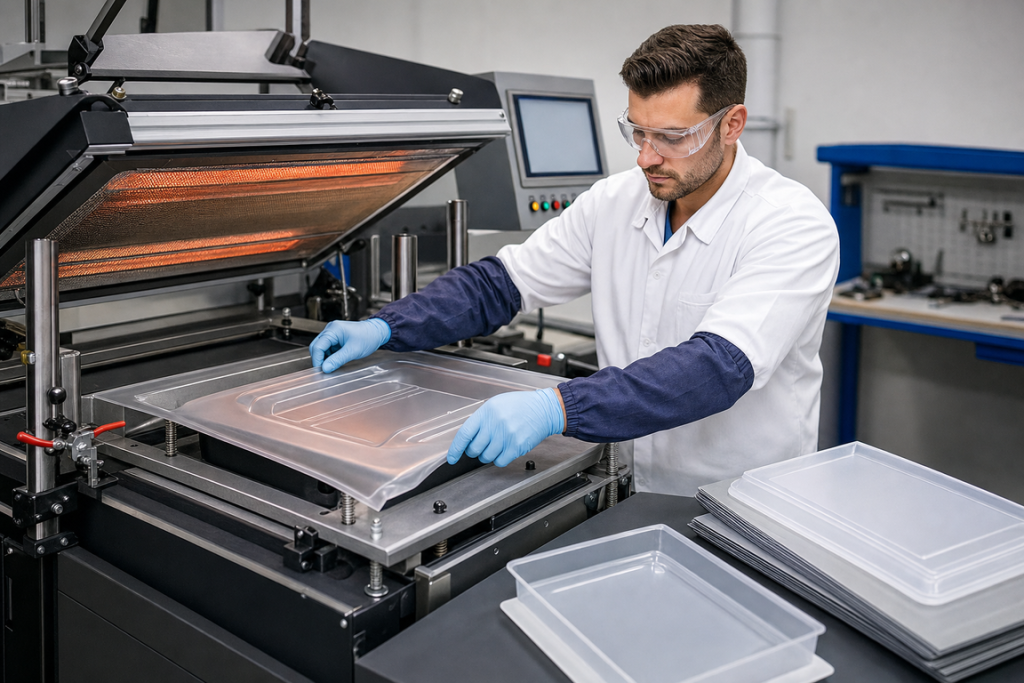
At SealWerks, our custom thermoforming services offer manufacturers a flexible, cost-effective solution for producing precision thermoplastic components without the burden of high tooling costs or extended development timelines. Our expertise in thermoforming services spans various industries, including medical, packaging, and industrial applications, ensuring tailored solutions for your specific needs.
We specialize in multiple thermoforming processes including vacuum forming, pressure forming, and custom solutions that align with design, material, and performance requirements. Our service allows the choice of diverse materials like PETG, HIPS, HDPE, and PC/ABS, among others, ensuring the highest quality in plastic thermoforming for any application.
Whether you are exploring plastic thermoforming options or refining a part design, SealWerks supports the full lifecycle of your thermoforming project, providing expert guidance, specialized solutions, and unmatched service quality.
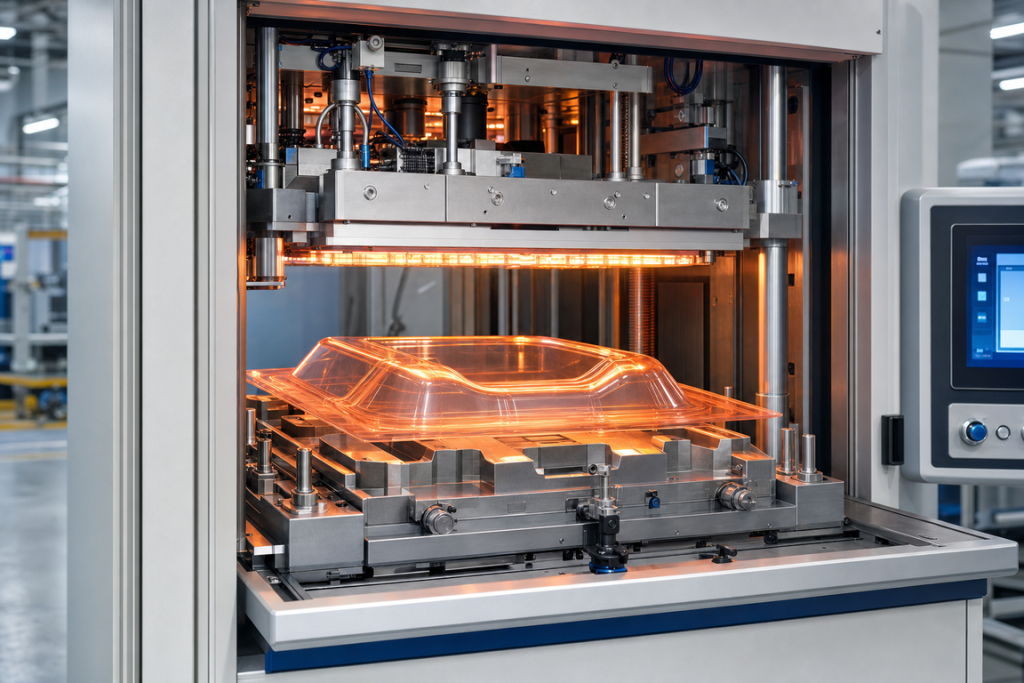
Thermoforming is a process used to shape heated thermoplastic sheet material over a mold to create finished or near-finished parts. Once formed and cooled, the part retains its shape and can be trimmed, finished, or integrated into a larger assembly. Compared to other plastic molding methods, thermoforming offers lower tooling costs and greater flexibility during early development and design changes.
Because molds are typically less complex than injection tooling, thermoforming is well-suited for prototyping and early-stage production. It allows manufacturers to evaluate form and function before committing to higher-volume processes. For many applications, thermoforming provides a practical balance between performance and speed while keeping tooling costs manageable.
Different thermoforming methods are used depending on the level of detail required, part geometry, and structural needs. Understanding these differences is key to selecting the right process for a given application.
Thermoforming is not a single, one-size-fits-all process, but a category of forming methods with multiple techniques available. At SealWerks, we support multiple thermoforming techniques and help manufacturing teams select the approach that best aligns with their application and production goals.
Vacuum forming is one of the most common thermoforming methods and is often used for parts with simpler geometries and consistent wall thickness requirements. In this process, heated thermoplastic sheet material is drawn over or into a mold using vacuum pressure, creating lightweight components with reliable dimensional repeatability.
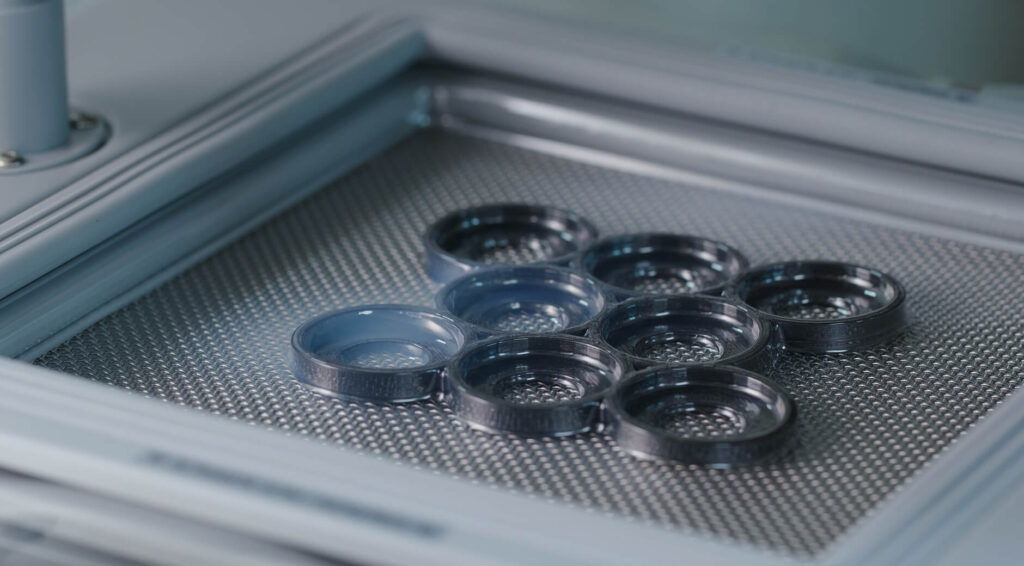
Vacuum forming accommodates a wide range of shapes, sizes, textures, and finishes. It is great for thermoformed enclosures such as plastic shrouds, housings, blister or bubble shells, trays, and covers, where cost efficiency and faster tooling lead times are priorities.
Pressure forming builds on the vacuum forming process by applying additional air pressure to achieve greater surface detail and sharper definition. This method is often selected when tighter tolerances or more refined cosmetic features are required, without the cost and complexity of injection molding.
Pressure forming is commonly used for parts that need improved aesthetics, clearer definition around features, or closer alignment with molded components in an assembly.
Custom thermoforming allows part designs and forming methods to be tailored to performance requirements while accounting for production constraints. This flexibility is especially important for manufacturers developing new products or refining existing designs.
SealWerks works closely with engineering and product teams to support custom thermoforming services across a wide range of applications. Whether you’re working from detailed CAD files or early-stage concepts, we help evaluate forming methods, material behavior, and design considerations to ensure the process aligns with functional and manufacturing goals. This collaborative approach helps address challenges early and reduces downstream revisions.
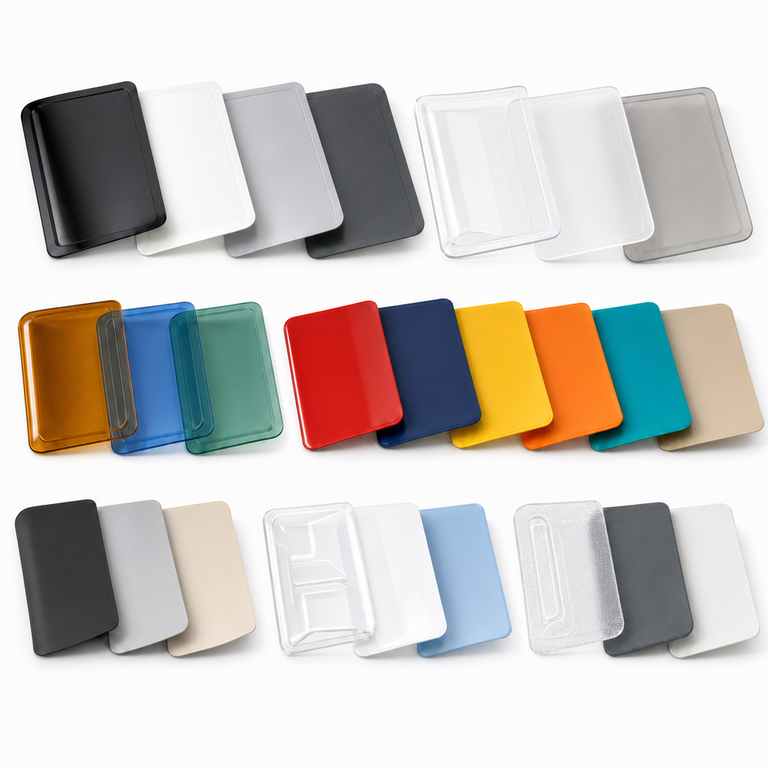
Material selection is critical to the success of any thermoforming project. Different thermoplastics offer varying levels of impact resistance, chemical compatibility, temperature tolerance, and cleanability, all of which must be considered alongside the forming method and end-use environment. These characteristics make these materials ideal candidates for creating custom products through vacuum forming or RF welding.
We work with a range of commonly used sheet plastics to produce thermoplastic parts that meet functional and manufacturing requirements. Part size and wall thickness are evaluated early to ensure material performance remains consistent through forming and downstream use. This upfront evaluation helps prevent material-related issues during prototyping and production.
In addition to forming, parts can be finished and prepared for integration into assemblies, supporting applications where fit and durability are essential.
Many thermoforming projects begin with prototyping or early validation rather than full-scale production. SealWerks supports this process by helping manufacturers evaluate part design, material selection, and forming methods before volumes are finalized. This early involvement allows adjustments to be made while tooling and timelines are still flexible.
As designs mature, we help guide the transition into production with an emphasis on repeatability and process consistency. Tooling refinements, material behavior, and finishing requirements are reviewed to ensure the forming process remains stable as quantities increase. This approach helps avoid surprises when moving from prototype parts into active production.
By supporting both development and production phases, SealWerks provides continuity throughout the lifecycle of a thermoforming project, reducing handoffs and maintaining alignment as requirements change.
SealWerks supports a range of manufacturing environments where thermoformed parts are used for functional, protective, or structural applications:
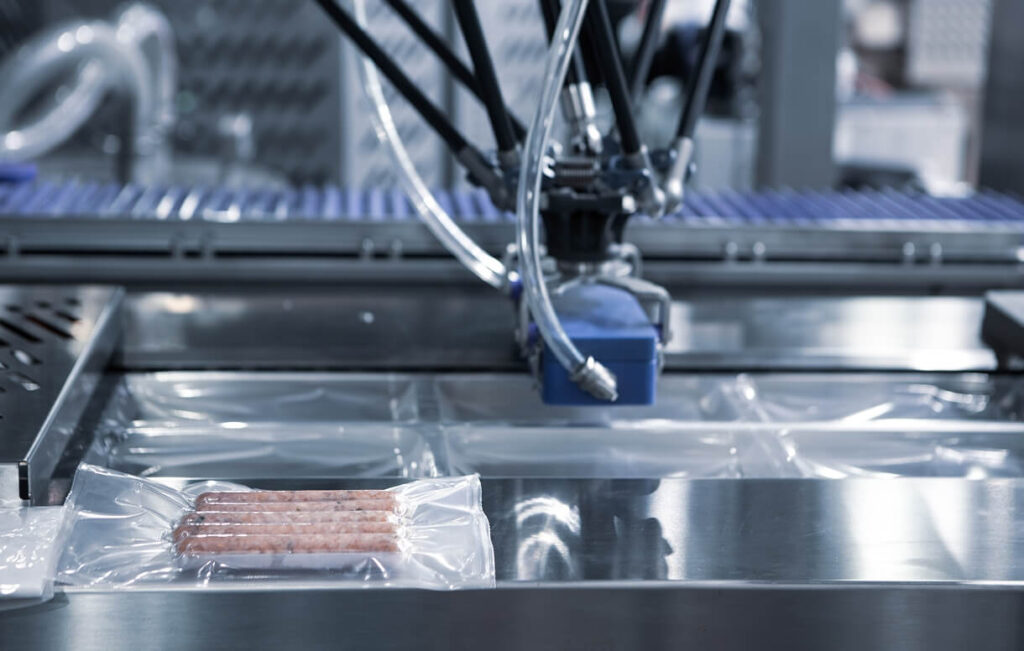
Our custom thermoforming services produce medical-grade enclosures, sterile barrier trays, equipment housings, and protective components designed for cleanability, biocompatibility, and dimensional consistency. Plastic thermoforming enables the creation of thermoplastic parts that meet strict regulatory requirements while maintaining cost-effectiveness for both disposable and reusable medical devices. From surgical instrument trays to diagnostic equipment covers, our custom thermoforming capabilities support the unique demands of healthcare environments.
Industrial applications require thermoformed parts that withstand harsh operating conditions, chemical exposure, and repeated impact. Our plastic thermoforming services create durable machine guards, equipment covers, and protective panels built for long-term performance. Custom thermoforming allows us to produce thermoplastic parts with specific chemical resistance, UV stability, and impact ratings that match your facility’s operational requirements while maintaining safety compliance.
Government projects often demand custom thermoforming services for specialized equipment housings, containment systems, and infrastructure components. Our thermoforming services support federal, state, and municipal applications where thermoformed parts must meet specific performance standards and procurement requirements. From protective enclosures for sensitive electronics to durable components for public infrastructure, our plastic thermoforming capabilities deliver reliable solutions for government specifications.
Manufacturing facilities rely on custom thermoforming to create specialized components that enhance production efficiency and workplace safety. Our plastic thermoforming services produce custom material handling trays, equipment guards, assembly fixtures, and protective covers that integrate seamlessly with existing production lines. These thermoplastic parts are designed to withstand continuous use while supporting lean manufacturing initiatives and operational optimization.
Military applications demand thermoformed parts engineered for extreme conditions and mission-critical reliability. Our thermoforming services produce ruggedized enclosures and components designed to meet MIL-SPEC requirements. Through custom thermoforming services, we create thermoplastic parts that provide superior impact resistance, environmental sealing, and lightweight durability for field equipment, vehicle components, and tactical gear systems.
Choosing a thermoforming partner is as much about process discipline and communication as it is about forming capability. SealWerks is built to support manufacturing teams that require consistency, responsiveness, and a clear understanding of how forming decisions affect downstream production.
If you’re researching or planning a thermoforming project, SealWerks provides plastic thermoforming services that support evaluation, prototyping, and production planning. Whether you’re developing new thermoformed parts or refining an existing design, we welcome RFQs at any stage of the process. Submit your project details today!
Thermoforming refers to a category of plastic forming processes that use heat to shape thermoplastic sheet material over a mold. Vacuum forming is one method within that category and uses vacuum pressure to form parts with simpler geometries. Other thermoforming methods, such as pressure forming and twin-sheet forming, are used when additional detail or structural strength is required.
Thermoforming is a better fit when tooling costs, development timelines, or design flexibility are key considerations. It allows manufacturers to validate part design and material performance before committing to higher-volume injection tooling, particularly during prototyping or early production stages.
An effective RFQ includes part drawings or CAD files, material requirements, expected volumes, and any performance or environmental considerations. Providing this information upfront helps streamline evaluation and ensures the recommended forming approach aligns with project goals.
Yes. Thermoforming is commonly used for prototyping and low-to-medium volume production because tooling is less complex and easier to modify. This makes it a good choice for projects that may evolve as testing, validation, or regulatory review progresses.